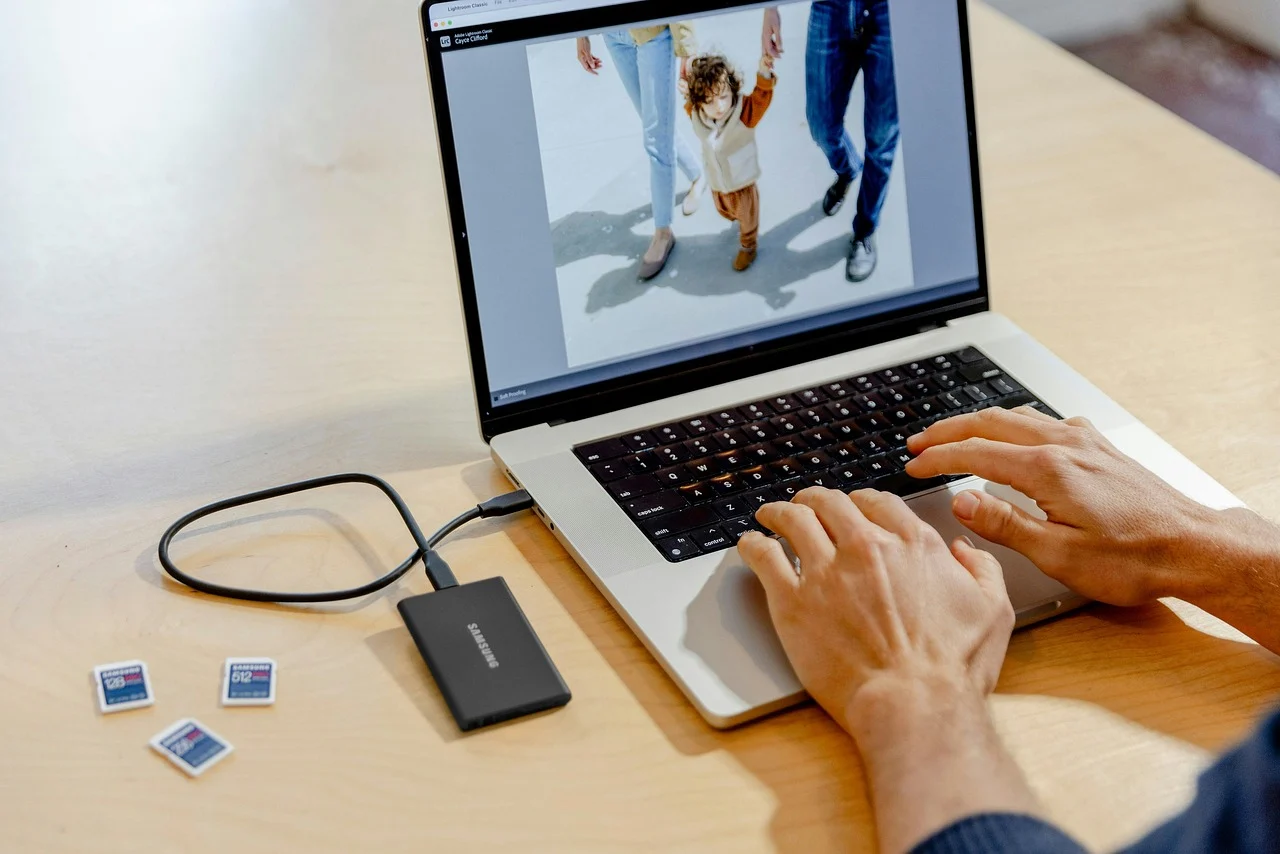
We spend our lives carefully curating our environments—the art on our walls, the music in our playlists, the books on our shelves. Yet we often give little thought to the most pervasive environment of all: our digital ecosystem. The camera, phone, and laptop you use aren’t just tools; they are the architects of your attention, the mediators of your memories, and the gatekeepers of your focus. Understanding this is the first step toward building a technological environment that doesn’t just help you do things, but helps you become who you want to be.
The Camera: A Lens on Your Attention
A camera is more than a device that captures light; it’s a tool that directs your gaze. The choice between a smartphone and a dedicated camera is fundamentally a choice about how you want to experience the world.
The smartphone camera is the tool of the immersed. It’s for the person who lives in the moment and wants a quick, high-fidelity memento. It says, “I am here, and I want to remember this.” But the dedicated camera—the mirrorless body with a prime lens—is the tool of the observer. It forces you to step back, to consider composition, to wait for the light. It trains you to see the world not just as it is, but as it could be framed. It’s a mindfulness practice disguised as a piece of technology. The photographer with the dedicated camera isn’t just taking a picture; they are having a different, more deliberate experience of reality than the person snapping with a phone.
The Phone: The Center of Your Digital Gravity
Your phone is the sun in your digital solar system. Everything else orbits around it. But what kind of star is it? Is it a nurturing one, providing light and warmth—maps, communication, knowledge? Or is it a black hole, sucking in your time and attention with endless feeds and notifications?
The choice here isn’t between iPhone and Android. It’s between a Portal and a Vortex.
A Portal phone is intentionally configured. Its home screen is a dashboard for your life, not a launching pad for distraction. Essential tools are front and center; time-wasting apps are buried or deleted. Notifications are ruthlessly pruned, allowing only what is truly important to break through. A Vortex phone, by contrast, is a device of defaults. Its home screen is a chaotic mosaic of every app you’ve ever downloaded. Its notifications are a constant, anxiety-inducing stream of “likes,” “breaking news,” and promotional spam. You don’t use a Vortex phone; you surrender to it.

If your phone is your digital center of gravity, your laptop is your workshop. It’s where things get built. And the state of your workshop directly impacts the quality of your work.
A cluttered laptop—with a messy desktop, a browser sporting two dozen tabs, and notifications popping up like weeds—is a cognitive tax. Every open tab is an unfinished thought. Every notification is an interruption. This environment fosters shallow, reactive work. It’s digital busywork.
A curated laptop, however, is a sanctuary for deep work. It has a clean, minimal desktop. The browser is used with intention, with tab groups or bookmark folders replacing the chaos of dozens of open pages. “Do Not Disturb” is the default state. This environment isn’t sterile; it’s professional. It tells your brain, “This is a place for focus.” The tool itself becomes a cue for entering a state of flow.
The Interconnected Self
The true power—or peril—lies in how these three devices interact. When they work in harmony, they create a seamless flow of information that enhances your life. A photo is captured on your camera, wirelessly transferred to your phone for a quick edit, and then seamlessly available on your laptop for a project. Your laptop’s focus mode automatically silencing your phone.
When they work at cross-purposes, they create a cacophony of distraction. A notification on your phone pulls you out of a deep work session on your laptop. The temptation to check social media on your phone prevents you from being present enough to use your camera meaningfully.
The Choice Is Yours
We often think of technology as something that happens to us. A new model is released, and we feel compelled to upgrade. A new app becomes popular, and we feel we must join. But this is an illusion.
You are the architect. You get to choose the camera that will teach you to see more deeply. You get to configure your phone to be a portal, not a vortex. You get to design your laptop into a workshop for focused creation.
Stop asking, “What’s the best camera/phone/laptop?” Start asking, “Who do I want to be, and what technological environment will best support that?” Your tools are listening. It’s time to tell them what to do.