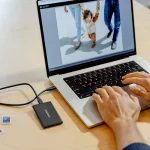
We live in the most technologically efficient age in human history. Our laptops compile data in seconds, our phones connect us to global knowledge, and our cameras capture moments with staggering clarity. We’ve never had more power at our fingertips. So why do we constantly feel so… behind? Why does the end of the day often bring a sense of frantic busyness rather than calm accomplishment?
Welcome to The Efficiency Delusion: the mistaken belief that faster tools automatically lead to more meaningful output. The truth is, our devices are often engines of activity, not progress. They excel at helping us do things quickly, but they offer little guidance on what is important to do. The path to true productivity isn’t a faster processor; it’s a more intentional brain.
The Myth of Multitasking and the Tyranny of Tabs
The cardinal sin of the digital age is the belief that we can effectively do multiple things at once. Your brain is not a multi-core CPU. It’s a task-switcher, and every switch—from writing an email to checking a notification to diving down a Wikipedia rabbit hole—carries a “cognitive tax.” You lose focus, context, and momentum.
Your browser, with its two dozen open tabs, isn’t a symbol of productivity; it’s a monument to your scattered attention. Each tab represents an unfinished thought, a “I’ll get back to that later” that never comes. It’s a digital version of having every book from your library spread open on the floor around you. You might feel surrounded by information, but you’re incapable of reading any single one.

Tech companies sell us on “frictionless” experiences. Seamless syncing! One-click purchases! Instant messaging! But friction is not always the enemy. In fact, a little bit of it is the guardian of your focus and your wallet.
· The Friction of Creation: Compare the mindless, frictionless act of scrolling through a social feed to the deliberate, slightly friction-filled process of writing in a journal or sketching on paper. The latter requires more effort, but it is infinitely more rewarding and productive. The friction is where the thinking happens.
· Intentional Friction: Delete the shopping apps from your phone. Now, if you want to buy something, you have to open a browser and type in the website. This tiny hurdle is often enough to make you ask, “Do I really need this?” Unsubscribe from promotional emails. Make distraction slightly harder to access, and you’ll find yourself naturally gravitating toward more meaningful activities.
The Three Shifts to Reclaim Your Output
Breaking the delusion requires a shift from being a passive user of tech to being its active conductor.
1. From Reactive to Proactive: Your devices are designed to make you react—to a notification, an email, a “like.” Take back the initiative. Each morning, before you open your email or messages, decide on the ONE most important task for your day. This is your “North Star.” Protect time for it fiercely. Let everything else—the emails, the Slacks, the random requests—orbit around this central priority, not the other way around.
2. From Connected to Concentrated: Constant connectivity is the enemy of deep work. Your most powerful tool is the “Do Not Disturb” function. Use it liberally. Schedule 90-minute “focus blocks” where all notifications are silenced, your email is closed, and your phone is in another room. This isn’t anti-social; it’s pro-work. It signals to your brain and to the world that you are in a state of creation, not just consumption.
3. From Automated to Curated: Don’t automate chaos. A poorly designed automated workflow just does the wrong thing faster. Instead, curate your digital environment.
· Curate your home screen. Only keep tools for creation and essential communication. Hide everything else.
· Curate your feeds. Unfollow accounts that make you feel anxious or competitive. Mute noisy group chats.
· Curate your inputs. Listen to full albums or long-form podcasts instead of algorithmically-generated, attention-fracturing playlists.
The True Measure of a Tool
The ultimate question to ask about any piece of technology is not “How fast is it?” but “How does it make me feel at the end of the day?”
Does your laptop leave you feeling drained and fragmented, having done a hundred small things? Or does it leave you with the quiet satisfaction of having built one meaningful thing?
Does your phone feel like a slot machine you desperately keep pulling, or a well-organized toolkit you used to enhance your life?
Efficiency is about saving minutes. Effectiveness is about investing hours in what truly matters. Stop optimizing for speed and start optimizing for significance. Your most valuable resource isn’t your device’s processing power—it’s your own, uninterrupted, deeply human attention. Guard it with your life.